2025.3.18字节一面
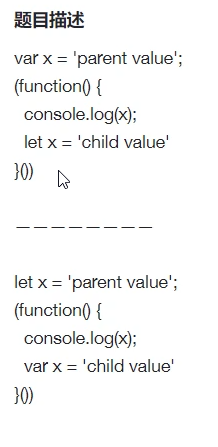
- javascript
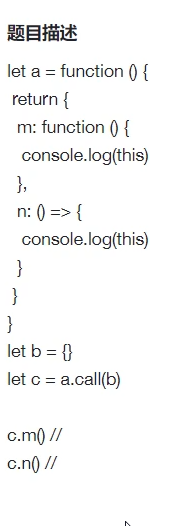
let a = function () { return { m: function () { console.log(this); // 普通函数 }, n: () => { console.log(this); // 箭头函数 } }; }; let b = {}; let c = a.call(b); // 使用 b 作为 this 调用 a c.m(); // 调用 m 方法 c.n(); // 调用 n 方法 - 如果是let c=a()呢
- javascript
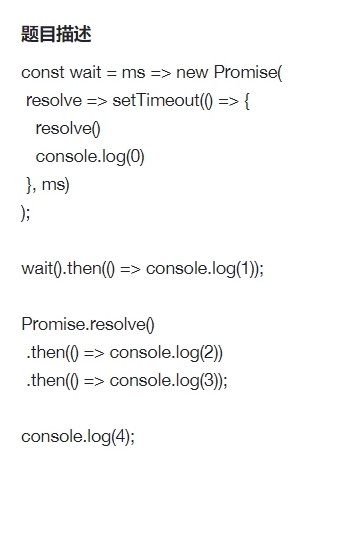
const wait = (ms) => new Promise( resolve =>
  setTimeout(() => {
    resolve();
    console.log(0);
  }, ms)
);

wait(0).then(() => console.log(1));
Promise.resolve()
  .then(() => console.log(2))
  .then(() => console.log(3));
console.log(4);
执行步骤分析:
同步代码执行:
javascriptwait(0).then(...) // 1. 初始化wait(0) Promise Promise.resolve()... // 2. 创建已解决的Promise链 console.log(4) // 3. 同步输出输出:
4微任务队列创建:
-
Promise.resolve() 会立即将第一个.then(()=>console.log(2)) 加入微任务队列 - 微任务队列当前:
[微任务1: console.log(2)]
-
宏任务创建:
-
wait(0) 中的setTimeout 被注册(延迟0ms) - 宏任务队列:
[宏任务1: wait的setTimeout回调]
-
事件循环处理:
执行微任务队列:
- 执行微任务1:
console.log(2)
输出:2 -
.then(()=>console.log(2)) 完成后,将下一个.then(()=>console.log(3)) 加入微任务队列 - 执行新增微任务:
console.log(3)
输出:3
- 执行微任务1:
微任务队列清空
执行宏任务队列:
执行宏任务1(wait中的setTimeout回调):
javascriptresolve(); // 完成wait(0)的Promise console.log(0); // 同步输出输出:
0
resolve() 将.then(()=>console.log(1)) 加入微任务队列
再次处理微任务队列:
- 执行新增微任务:
()=>console.log(1)
输出:1
- 执行新增微任务:
最终输出顺序:
markdown4 → 2 → 3 → 0 → 1- 为什么0可以被输出
- 答案 42301
- 算法题:不同路径
- usestate更新机制
- fiber架构
- diff算法